
Coherence: The Signature of My Work
The studio is organized around a simple idea: different forms of creative work can have distinct identities while still belonging to a larger whole.
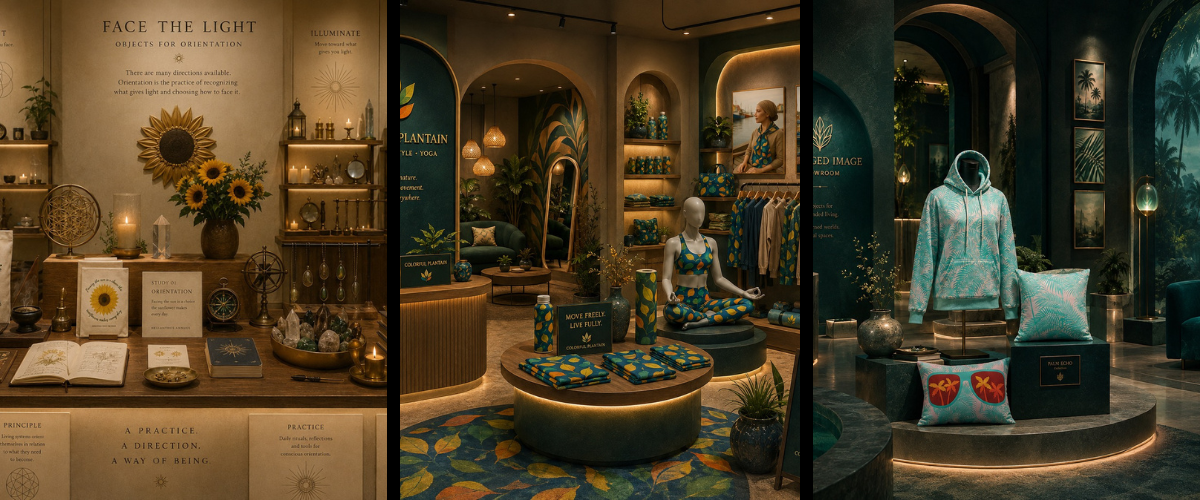
Rather than presenting everything within a single visual language, the studio is structured as a series of rooms, with each room introducing a different collection. One space might focus on fine art and image-making, another on objects and apparel, and another on work shaped by travel, culture, or experimentation. Each room establishes its own atmosphere, materials, and point of view, allowing the collection to be experienced on its own terms.
Moving from room to room also reveals the connections between them. Ideas, patterns, colors, materials, and methods may change, but certain principles continue throughout. The studio becomes less like a conventional showroom and more like a sequence of creative environments—each one offering a different expression of the larger practice.
At the center of that practice is coherence.
In a world filled with competing images, ideas, and information, coherence creates clarity. It is more than balance or consistency. It is the relationship between an idea and the way that idea ultimately takes form. For me, coherence is a way of seeing, developing, and creating. It connects the different mediums I work across, whether I am building a visual narrative, working with sound, developing a collection, exploring patterns, or guiding a project from its earliest concept through execution.
I am interested in finding the underlying structure of an idea rather than following a particular aesthetic simply because it is current. I look for relationships across disciplines: recurring patterns, visual rhythms, materials, systems, cultural references, and unexpected connections. Those observations become a framework for deciding what belongs, what can be removed, and how individual elements can work together.
This approach allows very different kinds of work to exist within the same creative practice without becoming disconnected. A photograph does not need to look like a textile. A garment does not need to behave like an installation. A collection does not need to resemble the collection in the room before it. What connects them is the thinking behind them.
Coherence is often what makes a piece feel resolved even before we can explain why. The composition, material, language, and intention reinforce one another. Nothing feels arbitrary. Complexity can remain, but it has structure.
That principle extends beyond individual works into the way projects and collections are developed. Whether I am creating an image, designing an object, developing a visual identity, or experimenting with sound and form, the goal is similar: identify what is essential, give complexity an understandable structure, and create something that feels complete within its own world.
The individual studio rooms make that philosophy visible. Each collection is given enough space to establish its own identity rather than competing with everything else at once. As visitors move through the studio, they encounter a succession of ideas and environments while gradually seeing the relationships between them.
Coherence, then, is not about making everything the same. It is about understanding what connects seemingly different things.
That is the signature running through my work: distinct collections, mediums, and ideas held together by a consistent way of seeing.